
COHORTS Invites
- Flow Design
- State Modelling
- Auth UX
- Security Design
- Interface Copy
- Next.js Build
What we're solving
COHORTS is a collaborative study platform where students run sessions together, so getting somebody into a session is the moment the product either works or does not. Invites go out by email to people who may not have an account yet. This is the flow that takes them from that email to being in the room.
Why it matters
Two things pull against each other here. An email invite gets forwarded, so a link that grants access on click hands a private session to whoever the recipient passes it to. But almost nobody is signed in when they click, and sending them off to authenticate usually means losing the invite, so they end up back in their inbox hunting for the email again. Tightening the security normally makes that round trip worse, and smoothing the round trip normally makes the link easier to abuse.
How we got there
The link is the whole entry point: Recipients arrive from an email with no account, no session, and no context beyond a subject line. Whatever the page does first has to work for somebody who has never seen the product.
Forwarding is normal behaviour: People forward invites to a colleague or to their own personal address without thinking of it as anything. The flow had to assume that happens rather than treat it as misuse.
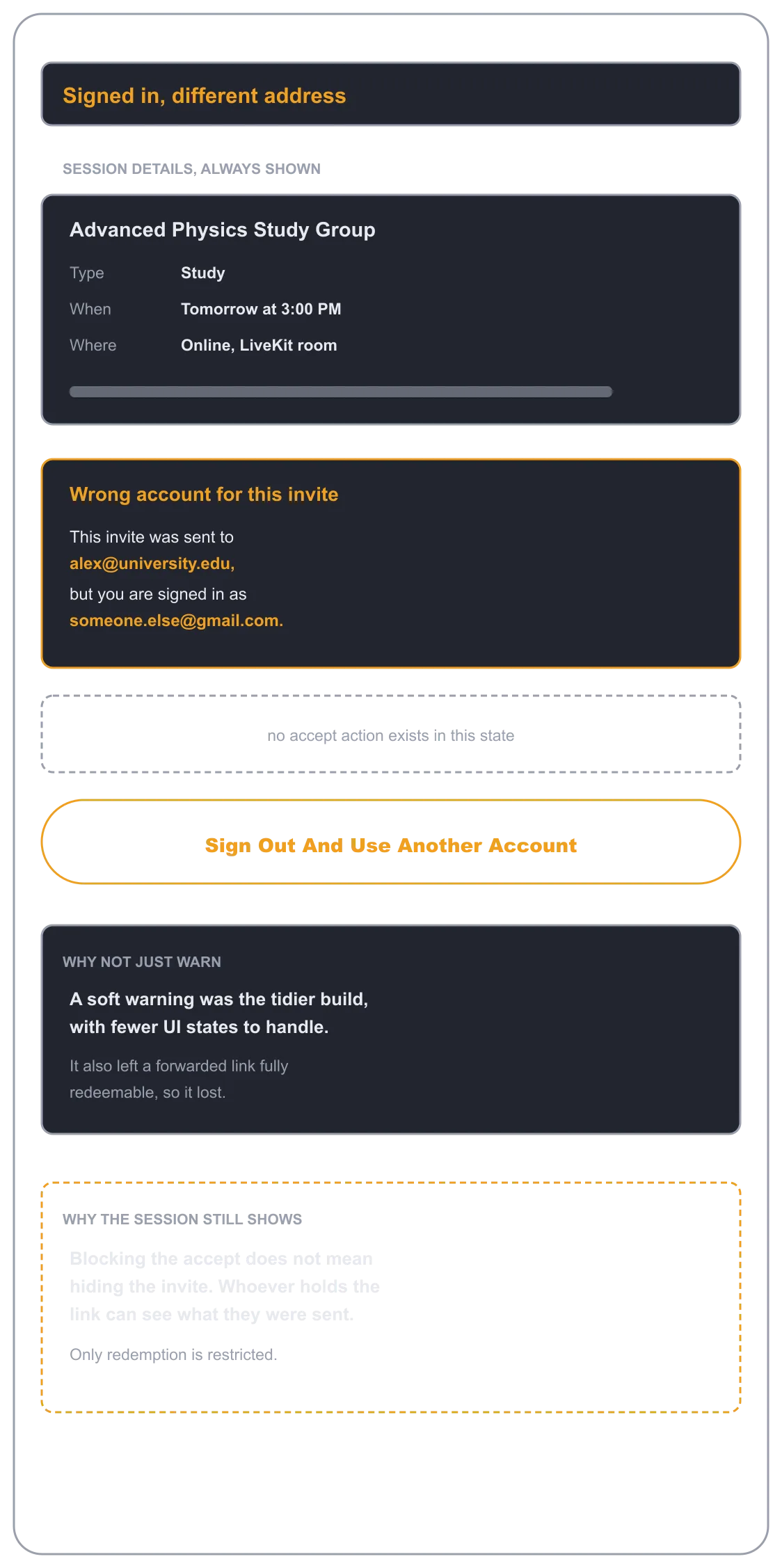
Where the old flow leaked: Acceptance was not strictly gated by the invited address on the server, and the handoff back from login was brittle enough that it felt like you had to reopen the email to finish.
Who this is for
Students being invited into a study session, most of whom are meeting the product for the first time through that email. Behind them, the session host who needs the right person in the room and nobody else.
Meet the users

The first-time invitee
Invited to a study group by a coursemate. Has never heard of the platform. Representative rather than interviewed.
- Age:
- 20
- Location:
- Manchester
- Occupation:
- Undergraduate
Goals
- See what the session actually is before signing up for anything
- Get from the email into the session without losing the link
Frustrations
Invite links that demand an account before showing anything, then land somewhere unrelated once the account exists.

The session host
Runs a small recurring study group and invites people by email. Representative rather than interviewed.
- Age:
- 23
- Location:
- Leeds
- Occupation:
- Postgraduate
Goals
- Know that the person who joined is the person invited
- Not have to chase anybody through a support process
Frustrations
A link forwarded to a group chat quietly turning a small study session into an open one.
What they need to do
- Understand the session before authenticating
- Sign in or sign up without losing the invite
- Return to the same invite afterwards
- Accept in one deliberate action
- Find out why acceptance is blocked
- Switch to the invited account and continue
- See plainly when an invite is spent
Mapping the journey
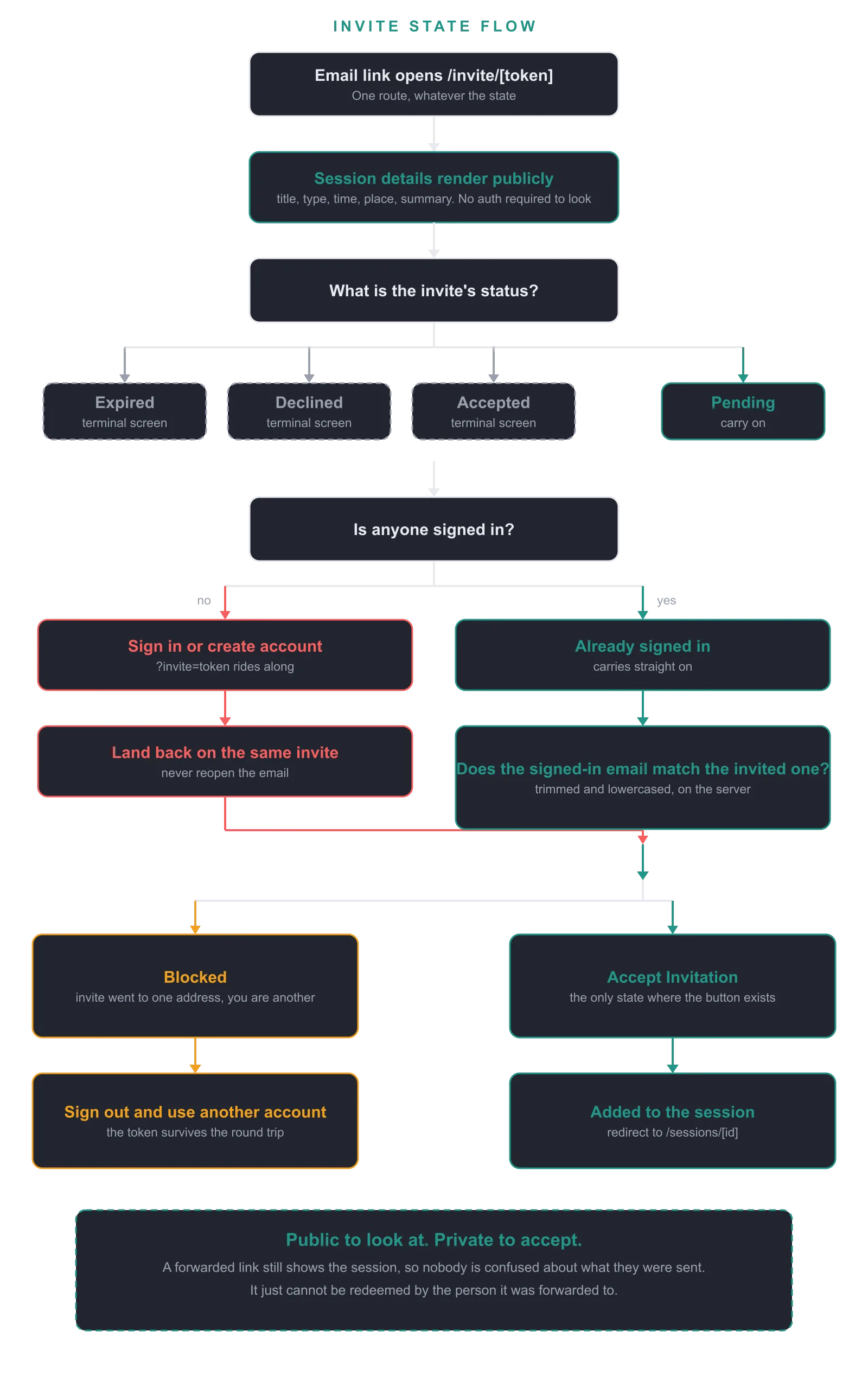
Sketching the structure
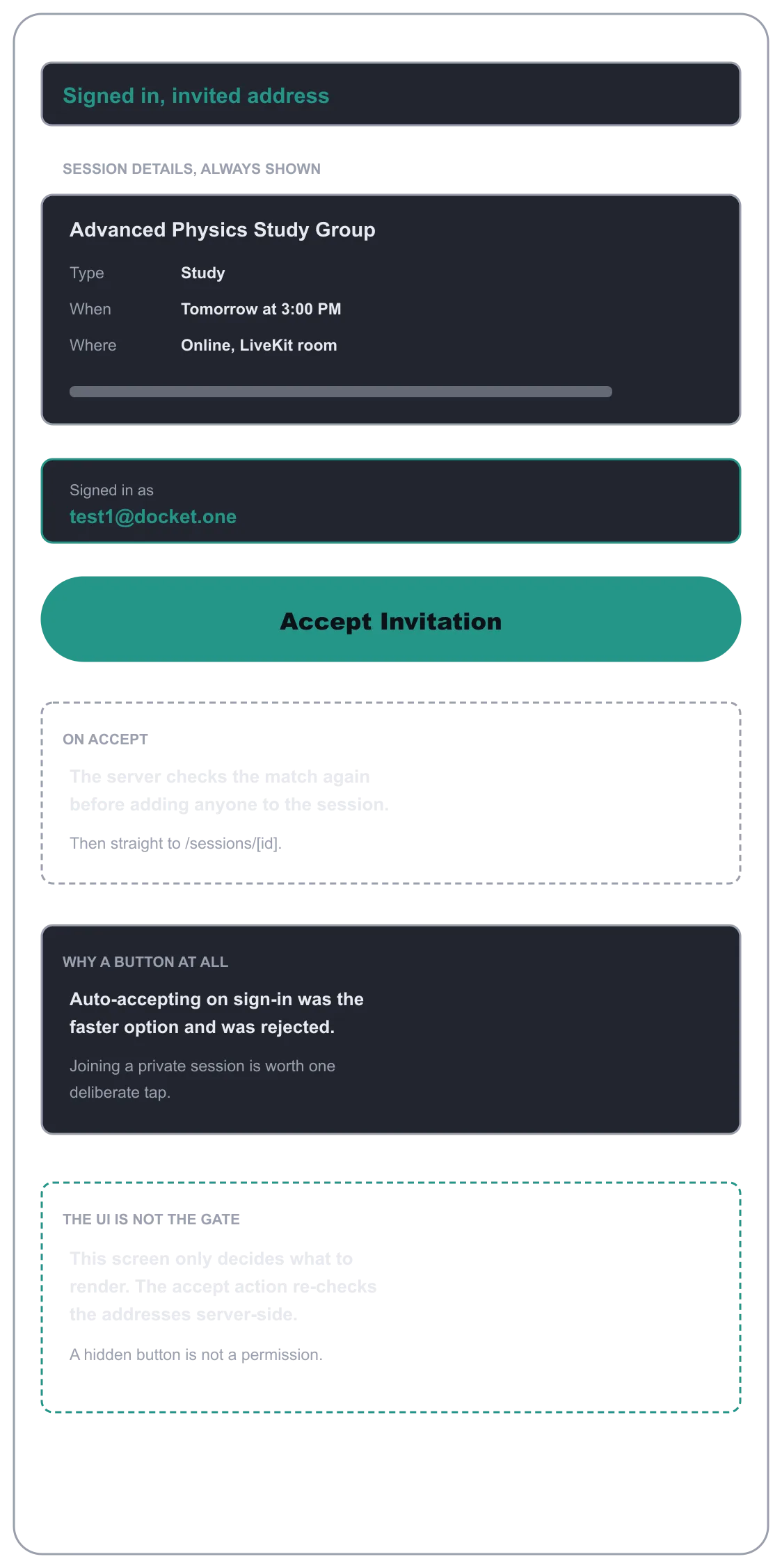
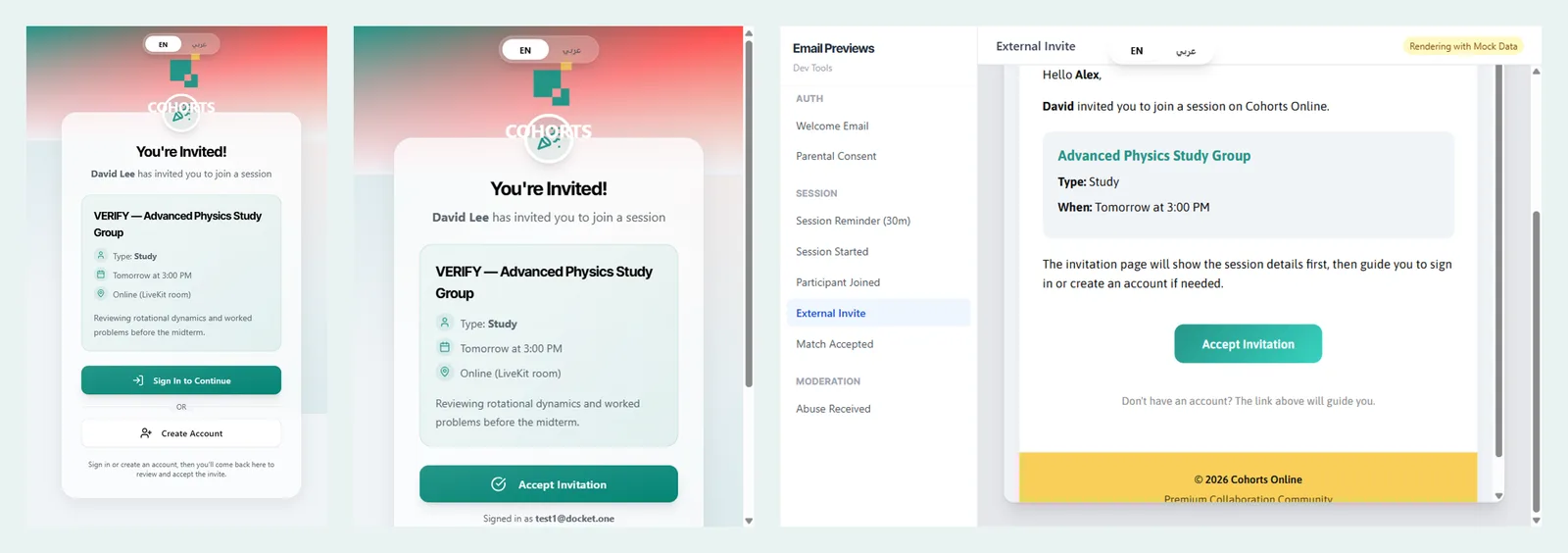
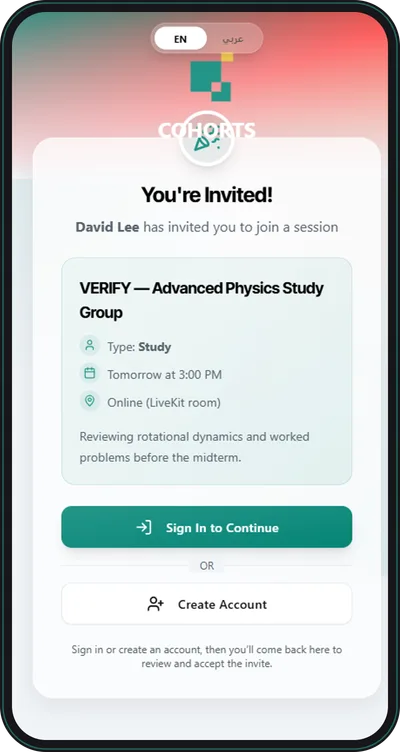
The finished experience